
Small Space Living: Furniture That Works Harder
If you live in an apartment, a townhouse, or any home where square metres are at a premium, you already know the challenge: how do you create a space that’s comfortable, functional, and stylish when there’s not much room to work with?
The good news is that designing for small spaces has never been easier. Australian furniture has caught up with how we actually live, and there are now genuinely well-designed pieces built specifically for compact living — furniture that stores more, takes up less room, and doesn’t force you to compromise on style.
At AusDecor, a significant portion of our range is designed with small spaces in mind. Here’s how to furnish your apartment or compact home smartly, room by room.
The Small Bedroom: Where Every Centimetre Counts
Your bedroom is likely the tightest room in a small home, and the bed is the biggest piece of furniture in it. Getting the bed right is the single most important decision you’ll make.
Choose a Storage Bed
If your bedroom doesn’t have a built-in wardrobe (or has a small one), a storage bed effectively gives you an entire extra wardrobe’s worth of space. Gas-lift beds are the most popular option — the entire mattress platform lifts on hydraulic struts to reveal a deep cavity underneath. This is where you store seasonal bedding, luggage, shoes, and anything else that would otherwise clutter your space.
The AusDecor Linden Gas Lift Storage Bed offers generous storage with a clean, modern look. For something with even more functionality, the Nova Storage Bed comes with a built-in USB charging station — which means you can skip the bedside table entirely if space is truly tight.
Rethink the Bedside Table
In a compact bedroom, traditional bedside tables can eat up valuable floor space. Consider a wall-mounted shelf, a slim console table, or a bed frame with a built-in shelf. If you do use a freestanding bedside table, choose one that’s no wider than 40cm and has at least one drawer for clutter-free storage.
Go Low-Profile
A platform bed with a low profile creates the illusion of more height in the room, making a compact bedroom feel airier. Avoid tall, bulky headboards if your ceilings are low — they can make the room feel top-heavy.
The Small Living Room: Flexible, Not Cramped
A small living room needs furniture that can adapt. The days of a giant L-shaped sofa dominating a tiny lounge are over — compact, modular, and multi-use pieces are the way forward.
Choose a Sofa That Fits
In a small living room, your sofa should be proportional to the space. Look for pieces with a slim profile, low arms, and raised legs (legs create visible floor space, which makes the room feel bigger). A two-seater or compact three-seater is usually the right call for rooms under 20 square metres. If you occasionally need extra seating, add a storage ottoman that doubles as a seat.
Use Vertical Space
When floor space is limited, look up. Tall, narrow shelving units, wall-mounted entertainment units, and floating shelves all provide storage and display space without eating into your floor plan. A ladder shelf is a particularly versatile option — it leans against the wall and takes up almost no floor space while offering several tiers of storage.
Multi-Function Furniture
An ottoman with internal storage can serve as a coffee table, extra seat, and blanket chest all at once. A console table behind the sofa works as a desk. A small dining table can double as a workspace during the day. The key is choosing pieces that serve at least two purposes.
The Small Dining Space: Make It Work
Not every Australian home has a dedicated dining room, and many apartments feature an open-plan living-dining layout where the ‘dining area’ is really just a corner of the living room. Here’s how to make it feel intentional.
Round Tables Are Your Best Friend
In a tight space, a round dining table almost always works better than a rectangular one. There are no corners to bump into, it’s easier to squeeze in an extra chair, and visually it creates a softer, more relaxed feel. A table with a pedestal base (instead of four legs) gives even more legroom and makes it easier to fit chairs underneath when not in use.
Stackable or Foldable Chairs
If you don’t need your dining chairs every day, stackable or foldable options are a smart move. Store them in a cupboard or against a wall, and pull them out when you need them. This single change can free up a surprising amount of floor space.
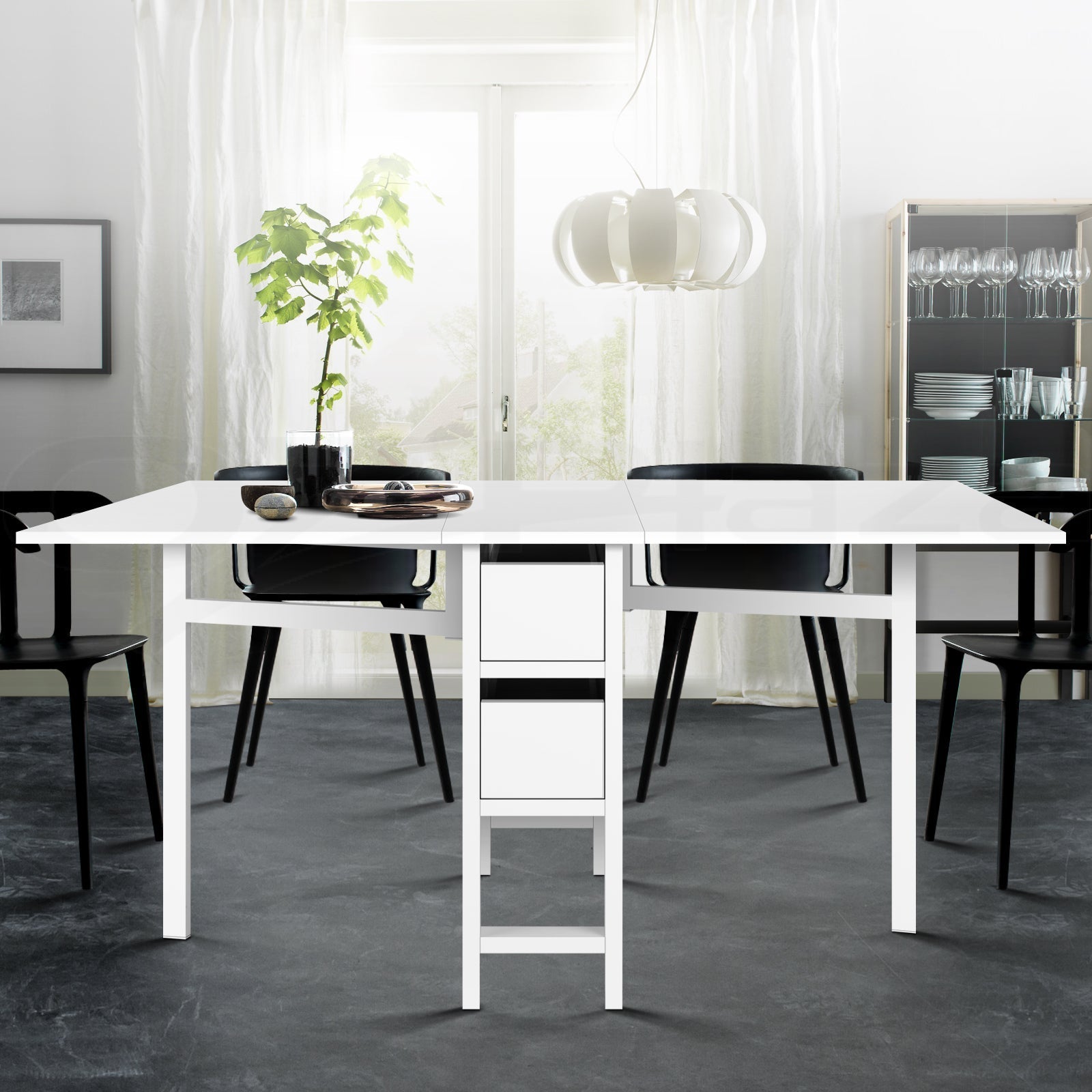
Drop-Leaf and Extendable Tables
If you frequently host but don’t want a large table taking up space every day, a drop-leaf or extendable table gives you the best of both worlds. Use it as a compact two-person table daily, and extend it to seat four or six when you have guests.
The Home Office Corner: Productive Without the Bulk
Working from home in a small space usually means carving out a corner of a bedroom, living room, or hallway. The goal is a functional workspace that can disappear (or at least blend in) when you’re not working.
A compact desk (80–100cm wide) is sufficient for a laptop, monitor, and a few essentials. Look for desks with built-in shelves, a drawer, or cable management to keep things tidy.
An ergonomic chair is worth the investment even in a small space — back pain doesn’t care about your square metreage. If a full office chair is too bulky, look for compact task chairs designed for home offices.
If you genuinely don’t have room for a dedicated desk, a wall-mounted fold-down desk or a console table that doubles as a workspace can work surprisingly well.
The Kids’ Room: Growing Up in a Small Space
Kids’ bedrooms in apartments are often the smallest rooms in the home, but they need to do the most: sleep, play, study, and store an ever-growing collection of toys and clothes.
A bed with built-in storage is essential. Drawer-style storage beds give kids easy access to their own things, and they teach good habits around tidying up.
Use the walls. Wall-mounted shelves, pegboards, and hooks keep toys, books, and bags off the floor and within reach. A narrow bookcase or cube storage unit can define the room without overwhelming it.
Choose furniture that grows with them. A king single bed frame will last from early childhood through to the teenage years, so it’s a better long-term investment than a novelty bed they’ll outgrow in two years.
Five Golden Rules for Small Space Furniture
1. Measure first, shop second. Every centimetre matters. Measure your room, measure the furniture, and make sure there’s enough clearance for doors, drawers, and walking paths.
2. Choose light over heavy. Light-coloured furniture and raised legs make rooms feel bigger. Dark, bulky pieces absorb light and make spaces feel smaller.
3. Storage is king. Every piece of furniture in a small home should ideally offer some storage. If it doesn’t store anything, it should at least be slim enough to not block storage elsewhere.
4. Don’t over-furnish. It’s tempting to fill every corner, but negative space is what makes a small room feel liveable. Leave room to breathe.
5. Invest in hero pieces. In a small space, every piece of furniture is on display. One beautiful bed frame or dining table elevates the entire room more than five mediocre pieces ever could.
Small Space, Big Style
Living in a compact home doesn’t mean settling for less. It means being smarter about what you bring in. The right furniture can make a 50-square-metre apartment feel spacious, functional, and genuinely beautiful.
At AusDecor, we believe great design should be accessible regardless of your space or your budget. Our collections include hundreds of pieces designed specifically for Australian apartments and compact homes — all with free delivery to most postcodes, flexible payments, and a 12-month quality guarantee.
Browse our full range at ausdecor.com.au, or explore our Shop by Room collections for curated looks designed for real Australian spaces.